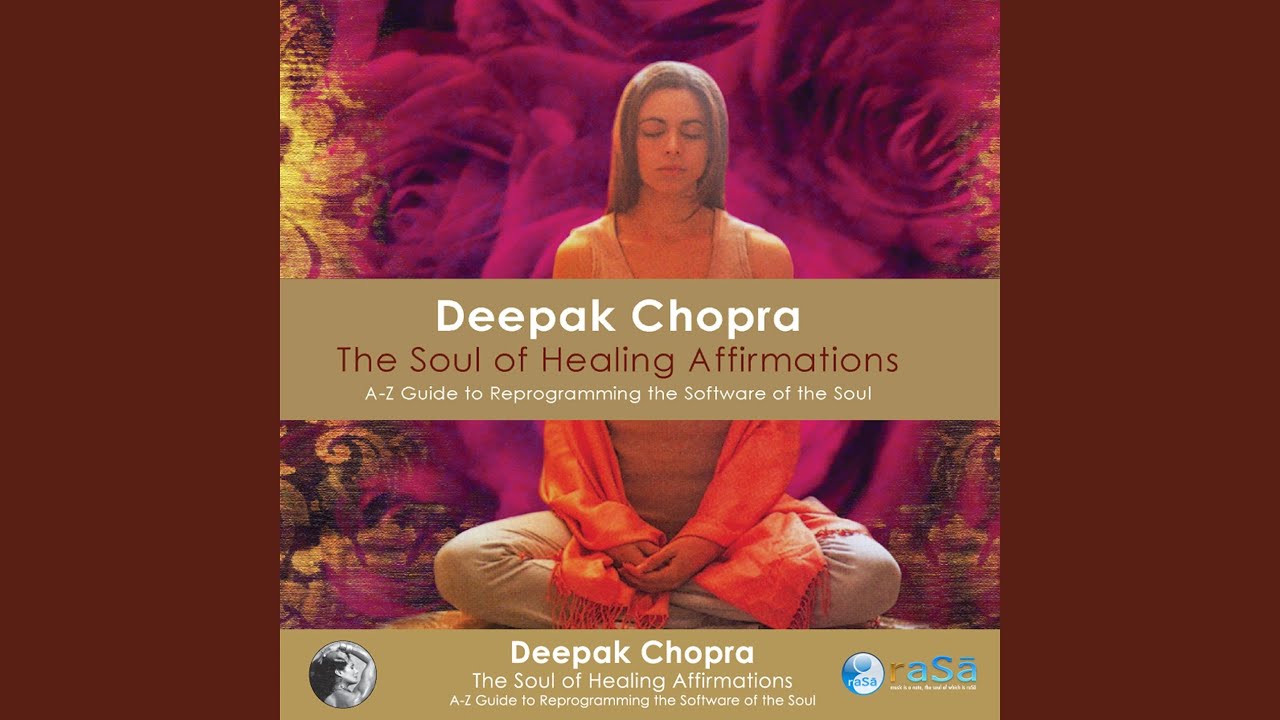
This meditation draws on the Heart Sutra, one of Buddhism's most revered texts, to guide practitioners into direct experience of emptiness and interconnection. Rather than intellectual study, the practice invites the body and mind to release attachments to fixed identity, accessing the liberating wisdom that form and emptiness are not separate. Through sustained contemplation aligned with ancient Buddhist teaching, the meditation becomes a portal to healing rooted in non-dual awareness.
What Is the Heart Sutra and Why Does It Matter for Meditation?
The Heart Sutra is a compact yet profound Buddhist scripture that distills the essence of the Prajnaparamita (Perfection of Wisdom) teachings. At its core lies a radical assertion: that emptiness—not nothingness, but the absence of fixed, independent, unchanging essence—is the fundamental nature of all phenomena. For centuries, contemplatives have used this text not as intellectual philosophy but as a meditation object, allowing its paradoxical truths to reshape how practitioners perceive reality.
The opening of the Heart Sutra presents Avalokiteshvara, the bodhisattva of compassion, in deep meditation. This positioning is deliberate: true compassion arises naturally when one perceives emptiness, when the illusion of separation dissolves. A practitioner who directly experiences emptiness—the absence of a solid, separate self—ceases to defend, grasp, or cling. This perceptual shift is healing at its root. It dissolves the ego-based contraction that generates anxiety, resentment, and suffering.
How Does Meditation on Emptiness Lead to Healing?
Conventional psychology often works to strengthen the ego—to build a more coherent, confident, defended self. But the Heart Sutra points in the opposite direction: healing comes through the deconstruction of the illusion that you are a fixed, separate entity. When you meditate on emptiness, you are not trying to become empty; rather, you are recognizing the empty nature that was always true.
This recognition has immediate somatic effects. The body relaxes. The nervous system shifts out of defensive posture. Breath deepens. When there is no "self" to protect, there is nothing to fight. This is the physiology of liberation. Many practitioners report that years of held tension—in the jaw, the shoulders, the chest—spontaneously release when emptiness is directly perceived, even briefly.
The Heart Sutra's most famous passage declares: "Form is emptiness; emptiness is form." This is not metaphor. It means that the material world—the body, sensations, emotions—and the open, luminous awareness that knows them are not two things. They are expressions of one reality. When this is felt in the body during meditation, separation collapses. You are not a isolated consciousness trapped in flesh; consciousness and flesh are one process.
What Does It Mean to Meditate on the Heart Sutra's Core Teaching?
A Heart Sutra meditation does not require memorization of Sanskrit or intellectual analysis. Instead, the practice invites you to hold the essential paradox in awareness: that you exist and do not exist simultaneously. You have form and no fixed form. You have a mind that thinks and perceives, yet that mind has no inherent, unchanging nature.
In practice, this might unfold as follows: you sit in stillness and notice the breath, the body, the field of sensation. As you observe without resistance, you begin to notice that sensations arise and pass. The "you" that observes them also has no fixed quality—awareness itself is spacious, impersonal, free. There is no watcher separate from what is watched. This recognition—direct, somatic, not conceptual—is the fruit of meditating on emptiness.
The Heart Sutra also teaches the dissolution of the "five skandhas" (aggregates): form, sensation, perception, mental formations, and consciousness. In meditation, you do not intellectually analyze these. You allow them to reveal their empty nature through observation. As you watch each aggregate, you notice it is not "mine," not fixed, not the core of who you are. This natural loosening of identification is profoundly healing.
Why Is Compassion Central to Heart Sutra Practice?
The Heart Sutra opens and closes with Avalokiteshvara, whose very name means "the Lord who Hears the Cries of the World." In iconography, Avalokiteshvara is often depicted with a thousand arms—each able to reach out and help. But this thousand-armed compassion does not arise from sentimentality or moral obligation. It flows from the wisdom of emptiness.
When you genuinely perceive that there is no solid boundary between self and other, that all beings share the same empty nature, compassion is automatic. You do not have to force yourself to care about others; you recognize that their suffering is inseparable from your own. Their joy is your joy. This is not abstract love but a living, embodied realization.
In meditation, as the sense of separate self softens, the heart naturally opens. Defenses relax. You become available to others in a new way. This is why the Heart Sutra is called a teaching on compassion—not because it instructs you to be nice, but because it reveals the non-dual nature of existence, from which boundless compassion naturally flows.
How Does Breathing Support Recognition of Emptiness?
The breath is the primary bridge between the body and awareness in meditation. When you follow the breath—not controlling it, but observing it with gentle attention—you naturally encounter emptiness. The breath has no fixed form; it is always changing. It arises without a "breather" deciding to breathe. It dissolves into the next breath without resistance.
As you align with the breath's natural emptiness, the body settles. The mind quiets. You are no longer resisting or grasping. You are allowing. This yielding is itself a recognition of emptiness in action. There is breathing; there is awareness of breathing. But there is no separate "you" making it happen. This realization, held in the body through the breath, is deeply healing.
What Is the Relationship Between Emptiness and Fullness?
A common misconception is that emptiness is blankness or nihilism. The Heart Sutra teaches the opposite: emptiness is not absence but infinite potentiality. Because phenomena have no fixed essence, they are fluid, responsive, infinitely creative. This emptiness is paradoxically full—full of all possibilities, full of love, full of compassion.
In meditation, as you release clinging to fixed identity, you often encounter profound peace, boundless love, or luminous clarity. These are not added to you; they are what remains when the contraction of false identity is released. Emptiness and fullness are two sides of one coin. The Heart Sutra celebrates this paradox: by letting go of everything, you gain everything.
How Can This Meditation Be Integrated Into Daily Life?
The Heart Sutra meditation is not meant to be confined to the cushion. Its wisdom is meant to inform how you move through the world. After sitting in recognition of emptiness, you carry that understanding into relationship, work, and challenge. When conflict arises, you remember: there is no solid self to defend. When fear emerges, you recognize: there is no fixed threat, only emptiness playing with form.
This does not mean becoming passive or indifferent. Rather, it means acting from clarity rather than reactivity. You respond to situations skillfully because you are not caught in defensive self-protection. You love more fully because the boundary between self and other is transparent. You move through life with less suffering because you are no longer clinging to an illusion.
Simple practices can anchor this integration: pausing during the day to notice the breath and the empty, spacious quality of awareness; recognizing the impermanent, interdependent nature of any difficulty; allowing compassion to arise naturally when encountering another's pain.
Where to Go From Here
The Heart Sutra is a living teaching, best understood through sustained practice rather than intellectual study. If this meditation resonates, consider establishing a regular practice: even ten minutes daily will deepen your familiarity with emptiness and compassion. Explore other Heart Sutra commentaries or recordings to understand the text from multiple angles. Consider studying the Prajnaparamita teachings more broadly, which provide rich context for the Heart Sutra's paradoxes. And most importantly, allow the practice to transform not just your moments of formal meditation but the quality of your presence in all things.